FreeCAD is an open-source parametric 3D modeler engineered to design physical objects of any scale. It features history-based parameter editing, bidirectional 2D drafting with geometric constraints, and standardized drawing generation for mechanical engineering, product design, and architectural workflows.
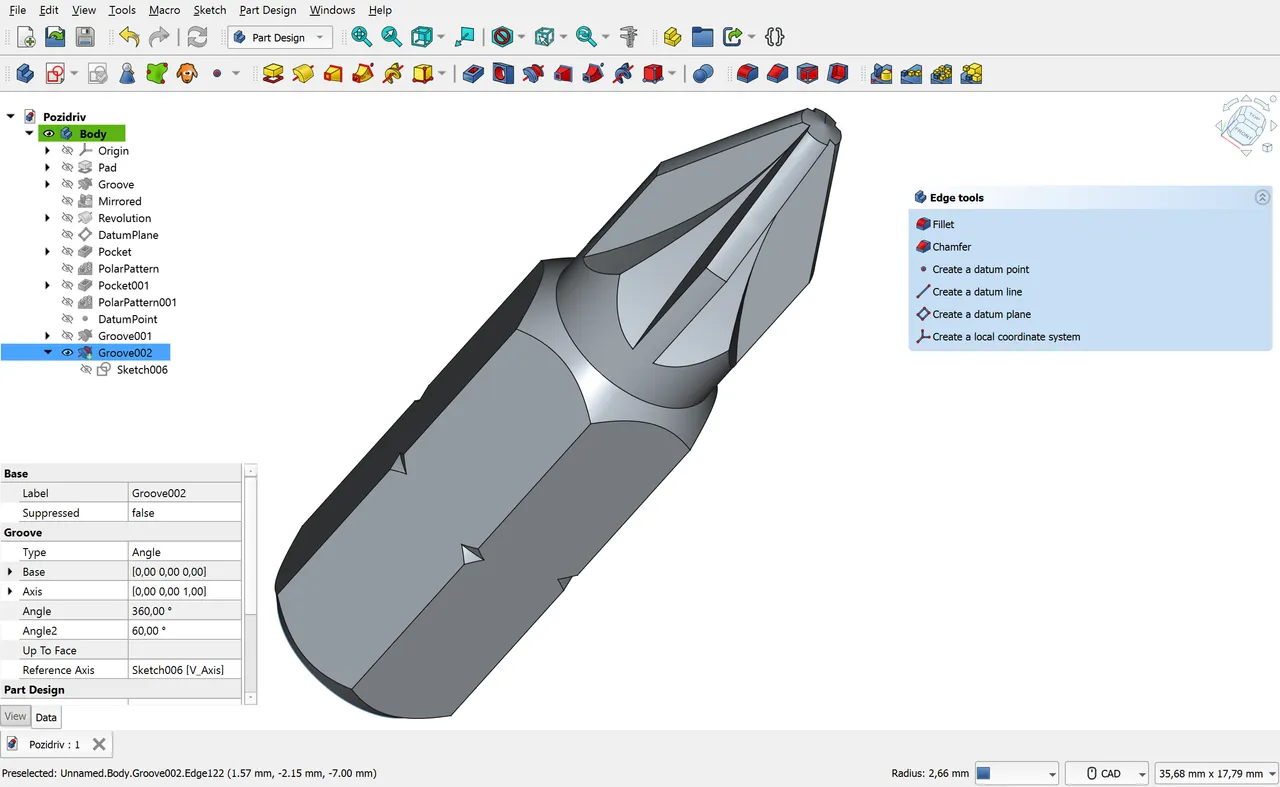
Technical Overview of FreeCAD
FreeCAD runs on the OpenCASCADE geometric kernel and Qt-based Coin3D visualization stack, delivering dedicated local computing without cloud dependencies or telemetry. The software distributes both as standard installers and portable runtime binaries, including standalone Windows archives, macOS app bundles, and Linux AppImages. It handles model computations locally while supporting headless command-line execution and Python automation scripts.
Core Features of FreeCAD
- History-based parametric modeling allows non-destructive design modifications by adjusting baseline dimensions and past model parameters at any phase of production.
- Constraint-driven 2D sketcher converts planar geometry into fully realized 3D solid parts and outputs high-precision technical documentation drawings.
- OpenCASCADE geometry kernel drives boundary representation solid modeling, complex boolean operations, and exact surface generation entirely offline.
- Extensive Python API provides programmatic access to internal workbenches, automated macro recording, and customized tool development without subscription barriers.
System Compatibility & Updates
- Supported operating systems: Windows (x86_64, ARM64 emulation), macOS (x86_64, Apple Silicon), and Linux (x86_64 AppImage, software center packages).
- The latest 1.1.3 maintenance release resolves repetitive version update prompt errors encountered during routine project file saves.
Why Choose FreeCAD?
FreeCAD combines an enterprise-grade geometric modeling engine with complete data ownership, eliminating recurring software licenses and mandatory cloud connectivity. Its open architectural framework grants engineers and hobbyists total freedom to modify project history, automate tasks via Python, and retain unrestricted access to their design files.